


Building a Voice That Is Actually Yours
- Feb 19
- 6 min read
Safety, Self Validation, and Singing Inside Cis Hetero Patriarchy
If you are a singer searching for your authentic voice, you have probably been told to “just be yourself.”
That advice is cute.
It is also useless.
Because what if the self you are being is the one you built to survive?
This article is for singers who feel that something outside of them has shaped their sound. Something relational. Something systemic. Something that feels bigger than technique.
If your voice changes depending on who you are with, what you are trying to secure, or what kind of future you are hoping not to lose, you are not broken.
You are adaptive.
But adaptation is not the same thing as independence.
And if you are working on building a voice that is truly yours, especially as a queer or trans singer, that distinction matters.

The Voice You Built to Survive
I grew up in a conservative environment. Religious. Hetero patriarchal. Rigid.
But even if you did not, you live in the world. And you likely learned two things very early:
Love is conditional.
Safety comes from the right alignment.
Alignment with what?
Cisgender norms.
Monogamy as default.
Gender roles.
Respectability.
Authority.
Power structures that reward compliance and punish deviation.
Even if you rejected those systems intellectually, your nervous system still absorbed them.
Gender studies makes this clear. Patriarchy sustains itself not only through policy but through internalization. Through repetition. Through reward and punishment. Through what Judith Butler calls performativity. We repeat what keeps us safe.
Pedagogy tells us we learn through attachment.
Therapeutic theory tells us attachment organizes the nervous system.
So what happens if your nervous system learned that safety comes from one source?
One partner.
One teacher.
One authority.
One right way of being.
You start regulating through them.
And your voice follows.
If safety lives outside you, your sound will try to impress.
If safety depends on approval, your breath will brace.
If safety requires containment, your range will narrow.
This is not poetic exaggeration. The vagus nerve, intercostal engagement, laryngeal tension, and resonance strategies all shift depending on perceived safety. When attachment feels unstable, the body constricts. When the body constricts, the voice compensates.
Patriarchy shapes posture.
Posture shapes breath.
Breath shapes tone.
It is that simple. And that inconvenient.
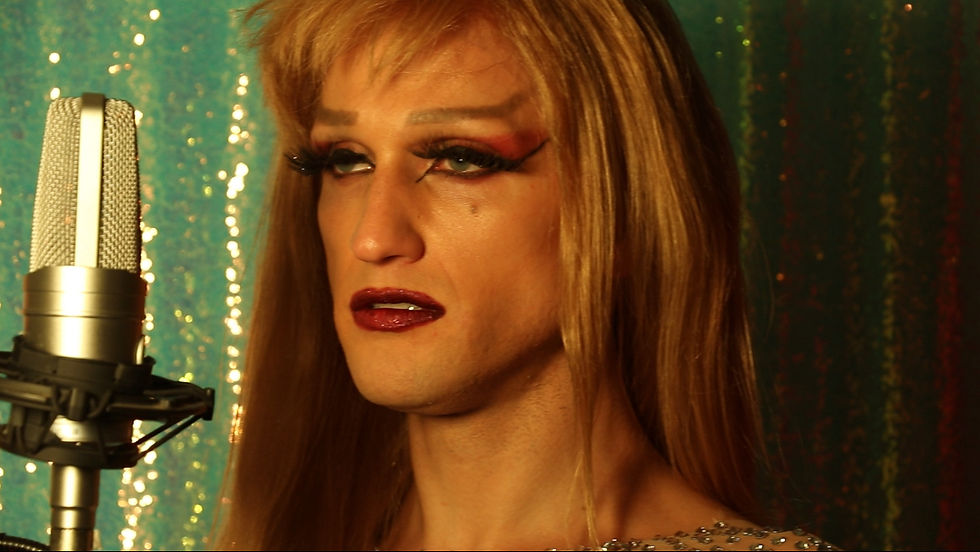
I Did Not Know My Voice Was Collapsing
This part is not clean.
I went through a brutal winter.
My voice was my solace. Even when my life felt chaotic, relationally and socially, I still practiced. I still warmed up. I still maintained structure. I still sang.
My embodiment practice never fully left me.
I was moving fast. I was dispersing energy widely. There was intensity. There was urgency. There was a certain kind of overextension that felt glamorous until it did not.
But underneath all of it, something else was happening.
I knew I was on something.
Not substances.
Me.
There was a thread of self that refused to disappear.
The destabilizing part was not non monogamy. It was not desire. It was not freedom.
It was falling back into an old intimacy pattern that mirrored how I was taught love should work.
Singular.
Possessive.
Subtly hierarchical.
Gendered in ways that re centered male comfort.
I did not see it immediately. I did not have an academic thesis in my head about hetero patriarchal attachment structures.
What I had was a body.
After a stretch of emotional friction and difficult conversations within my support system, I stepped on stage one night and felt something shift.
Not technically. I have had technique for years.
This was different.
My upper range felt easier. My passaggio did not resist. My belt was grounded without force. My body felt organized in a way that had nothing to do with perfection and everything to do with permission.
Later, when that particular intimacy collapsed in a way that was not safe for my being or my voice, I noticed something important.
The voice did not shrink.
It grew.
Because I drew a boundary.
Even in the mess.
Even imperfectly.
And yes, it was an Amy Winehouse song, which feels cosmically on brand.
I cannot give you a clean cause and effect map.
But I can tell you this.
When I was chasing regulation externally, my sound was brilliant but strained.
When I chose myself, even awkwardly, my sound stabilized.
The difference was not more knowledge about singing technique.
It was self validation.
My daily vocal practice gave me a baseline. It taught me what alignment felt like physically. So when something relational destabilized that baseline, I could feel it in my breath, in my tone, in my transitions.
That is what embodiment actually is.
Not vague self awareness.
A measurable baseline in your instrument.
Voice work became self recognition.
Not therapy.
Not enlightenment.
A compass.


How to Build Somatic Literacy as a Singer
If you want vocal independence, you need a repeatable structure. Not just inspiration.
Here is a framework I use in my own work and in voice coaching in Toronto with singers seeking autonomy in their sound.
Step One: Establish Your Baseline
Ten to fifteen minutes of consistent warm up. Same sequence daily. Track what happens in:
• Lower register resonance
• Passaggio transition
• Upper range release
• Belt coordination
• Jaw and tongue tension
Notice how these areas respond before and after rehearsal, performance, or intense relational interaction.
Your passaggio is not just a technical hurdle. It is a control point. If your passaggio tightens after a conversation, that is data.
Step Two: Breath First
Before asking psychological questions, breathe.
Where is my breath sitting right now?
Chest?
High ribs?
Collapsed low belly?
Place one hand where you feel holding. Do not label it approval or rejection yet. Just breathe into that spot slowly.
If I breathe into this holding, what shows up underneath it?
Give it thirty seconds. No analysis. Just sensation.
Often what surfaces is a subtle bracing. Sometimes it is anticipation. Sometimes it is the desire to be seen. Sometimes it is the fear of being dismissed.
You do not need to name it perfectly. You just need to feel it.
Step Three: Clarify Alignment
Journal or reflect on this:
What am I aligning with right now?
Is it a person?
An ideal?
A future fantasy?
A value that is not actually mine?
And then ask:
What would my voice do if it did not need anything from anyone in this room?
That question changes phrasing. It changes breath. It changes resonance strategy. Try singing the same phrase before and after asking it.
That is not mystical. That is neuromuscular.
Step Four: Relational Impact Audit
After intense relational experiences, sing scales through your passaggio and into upper extension.
Notice:
Is the onset clean or aspirated?
Is the vowel narrowing prematurely?
Is belt collapsing into throat engagement?
Is vibrato tightening?
These are physical indicators of regulation shifts.
Your instrument is honest.
If your sound destabilizes after certain dynamics, that is information. Not drama. Not shame. Information.
Over time, this practice builds internal regulation that does not depend on a single attachment source.
And that is freedom.


Conditional Love and the Single Safe Source Myth
Many of us were trained to believe safety comes from one central figure. One partner. One teacher. One structure.
This narrative is reinforced by monogamous defaults, by gender norms, and by scarcity thinking inside queer communities too.
Trans people are often forced to interrogate these systems because survival requires it.
We see how privilege operates. We see how some benefit from dynamics they do not acknowledge. We see how women and even queer men can unconsciously uphold structures that harm us.
That confrontation is exhausting.
It is also liberating.
When you stop organizing your nervous system around someone else’s comfort, your breath deepens.
When your breath deepens, your sound expands.
And suddenly your upper register is not fighting you.
Coincidence? I doubt it.

This Is Not Therapy
I am not a licensed therapist. I am a voice teacher and life coach working in collaboration with a neuroscientist and gender studies scholar. Our work integrates vocal pedagogy, nervous system literacy, and critical theory.
What we offer is not clinical treatment.
What we offer is structured voice work, informed conversation, and a space where lived experience is taken seriously without being pathologized.
Divine Voice is a program for singers who want to unmask internally. Who want to understand how systems shape sound. Who want to build vocal technique that supports self ownership rather than compliance.
And yes, if you are searching for gender-affirming voice lessons in Toronto that go beyond scales and into embodied autonomy, this is that.
Subtle SEO moment achieved. You are welcome.

Reclamation
Singing is one of the few places where the body refuses to lie for long.
You can perform confidence.
You can intellectualize empowerment.
You can curate a brand.
But breath and resonance reveal contraction.
When you build a consistent somatic practice through your voice, you start trusting your own alignment more than external validation.
That is the shift.
Not from chaos to purity.
From external regulation to internal stability.
If this resonates with you, reach out.
You can contact me at
Or book a consultation here:
We are building something serious.
And something joyful.
And something a little bit rebellious.
Your voice does not need permission to exist.
It just needs you to choose it.


Comments